
Common Reasons Gel Polish Chips or Lifts Early — And What It Reveals About Nail Care Quality
A gel manicure is expected to do more than simply look polished. It should remain stable, intact, and supportive of natural nail health for weeks. When gel polish begins to chip or lift prematurely, it is rarely a coincidence.
In many cases, early lifting is an indication that one or more critical steps in the process—such as preparation, moisture control, or curing—have not been performed to professional standards. Understanding these factors not only helps extend the life of your manicure, but also protects the integrity of your natural nails.
Preparation defines performance
The durability of gel polish begins at the foundation. Proper nail preparation ensures that the gel coating can adhere securely to the natural nail plate.
Even minimal traces of oil, dust, or residue can interfere with bonding. Without careful cleansing and controlled surface refinement, the gel layer may begin to lift at the edges within days. In professional environments, preparation is treated as a precise and deliberate step—never rushed, never overlooked.
Moisture and oil: Invisible but critical factors
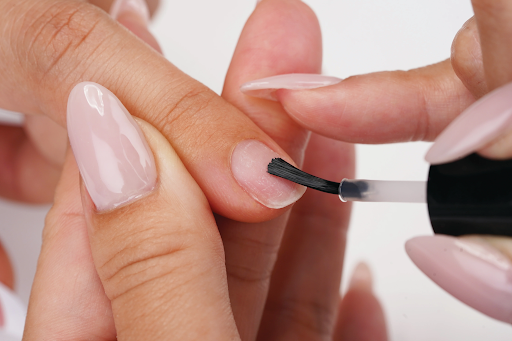
The durability of gel polish begins at the foundation. Proper nail preparation ensures that the gel coating can adhere securely to the natural nail plate.
Even minimal traces of oil, dust, or residue can interfere with bonding. Without careful cleansing and controlled surface refinement, the gel layer may begin to lift at the edges within days. In professional environments, preparation is treated as a precise and deliberate step—never rushed, never overlooked.
Moisture and oil: Invisible but critical factors
Moisture is one of the most common causes of early gel failure. When nails absorb water prior to application, they temporarily expand. As they return to their natural state, the gel coating may lose its grip.
Natural oils can create a similar effect. Without proper dehydration and priming, the surface of the nail becomes less receptive to gel adhesion. These steps, while often unnoticed by clients, are essential in maintaining structural stability.
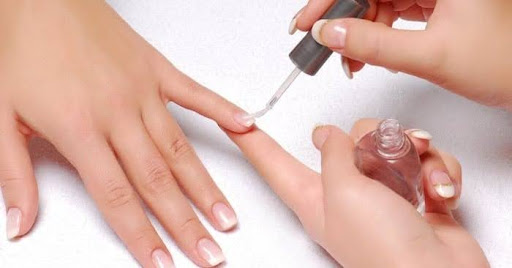
Application technique determines structural integrity
Gel polish is not simply painted onto the nail—it is built in controlled layers. Each layer must be applied with precision to ensure even distribution and proper curing.
Curing: The step that determines longevity
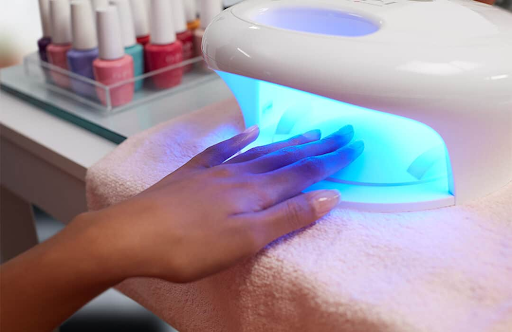
Curing is a controlled process that transforms gel polish into a durable coating. It requires calibrated timing, appropriate layer thickness, and professional-grade equipment.
When curing is incomplete, the surface may appear dry while the underlying structure remains unstable. This imbalance often leads to early lifting or dullness. Consistency in curing is essential to achieving long-lasting results.
When layers are applied too thickly or inconsistently, the gel may appear smooth but lack internal stability. Over time, this leads to chipping, cracking, or lifting. A well-executed application balances technique with restraint, allowing each layer to cure correctly.
Hygiene and process control
In many cases, early lifting is not only a technical issue, but also a matter of hygiene.
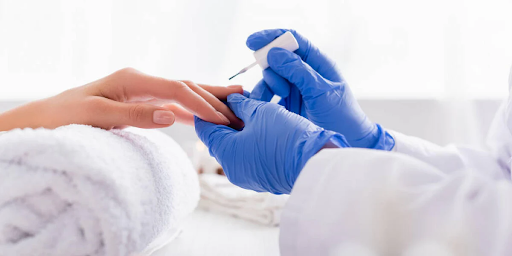
If tools, surfaces, or the nail plate are not properly sanitized, contamination may occur during the application process. This can affect adhesion and, in some cases, compromise nail health. Professional nail care requires a clean, controlled environment where every step is performed with attention to sanitation.
Daily wear and environmental exposure
Even when applied correctly, gel polish is influenced by daily conditions. Repeated exposure to water, cleaning agents, and mechanical stress can gradually weaken the coating.
Using nails as tools or exposing them to harsh environments accelerates this process. While gel polish is designed for durability, its longevity depends on how it is maintained after application.
Product quality and nail condition
The performance of a gel manicure is also shaped by the materials used and the condition of the natural nail.
Professional-grade gel systems are formulated to provide flexibility, adhesion, and resistance to wear. Lower-quality products often lack these properties, leading to early breakdown.
Similarly, nails that are thin, weakened, or over-processed may not provide a stable surface for adhesion. Healthy nails are essential to achieving consistent, long-lasting results.
A professional perspective on nail longevity
A well-executed gel manicure reflects more than technique—it reflects the level of control, hygiene, and consistency within the service environment.
For clients in Dallas, particularly around Wynnewood Village, selecting a salon that applies these standards consistently can significantly influence both nail health and manicure longevity. When each step is performed with precision, the results are not only visible—they last.
When gel polish chips or lifts early, it is often an indication that a critical part of the process has been compromised. Preparation, moisture control, application technique, curing, and hygiene all contribute to the final result.
By understanding these elements, clients can make more informed decisions about where and how they receive their nail care. Because a gel manicure should not only look flawless—it should remain that way.