
How Improper Application Affects Nail Texture and Finish — Understanding What Lies Beneath the Surface
Improper nail product application disrupts how gel layers level, cure, and bond to the nail surface. This leads to uneven texture, dull or distorted finish, and reduced durability, even when high-quality products are used.
A refined manicure is often recognized by its smooth surface and mirror-like shine. However, these visible qualities are not simply the result of the products applied—they are the outcome of controlled technique at every stage.
When an application lacks precision, the issue is not limited to surface appearance. It affects how the product distributes, stabilizes, and interacts with light. Subtle inconsistencies at the application stage can translate into visible imperfections after curing, and structural weaknesses over time.
Understanding how improper application affects nail texture and finish reveals why technique is a defining factor in professional nail care.
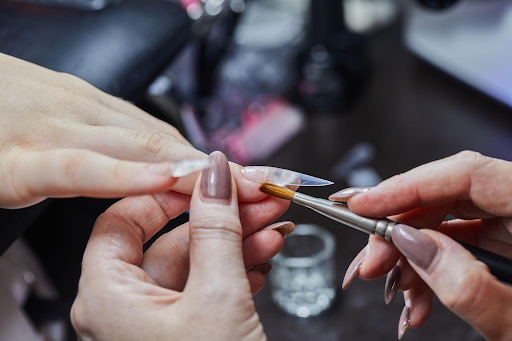
What defines a smooth, high-quality finish?
A smooth nail surface is the result of uniform product distribution and controlled curing. When gel is applied evenly, its self-leveling properties allow it to spread across the nail plate, minimizing surface irregularities.
This creates a consistent reflective plane where light is evenly dispersed, producing a high-gloss finish. The clarity of this reflection is directly tied to how stable and balanced the underlying layers are.
Any disruption in this process—whether from uneven thickness or inconsistent application—interferes with light reflection and reduces surface clarity.
How uneven application disrupts surface uniformity
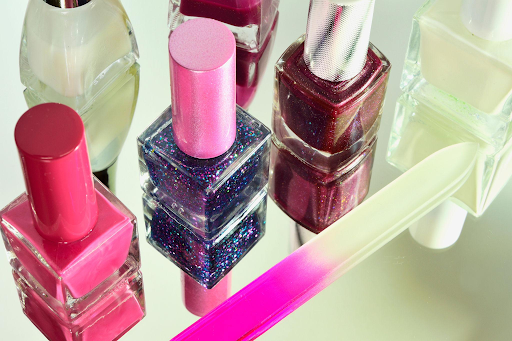
Gel products rely on controlled viscosity and surface tension to self-level. When application is uneven, this balance is disrupted.
If excess product accumulates in certain areas while remaining thin in others, the gel cannot redistribute evenly before curing begins. This results in micro-level inconsistencies that appear as ridges, streaks, or a slightly uneven texture.
Once cured, these irregularities become fixed in place, affecting both the tactile feel and visual finish of the nail.
Layer thickness and internal stability
Layer thickness directly influences how the gel cures and stabilizes. Thicker layers reduce light penetration, limiting the effectiveness of polymerization beneath the surface. This creates a structure where the outer layer appears solid, while inner sections remain less stable.
This imbalance not only affects durability but also contributes to a distorted finish. Over time, uneven curing can lead to surface dullness, subtle warping, or early breakdown of the manicure. Thin, controlled layers allow for even energy distribution during curing, resulting in a more cohesive and stable structure.
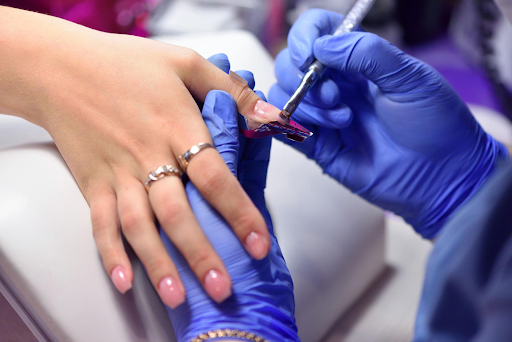
Brush control, product flow, and self-leveling behavior
Application technique directly influences how the product behaves on the nail surface.
Gel is formulated to self-level, but this property depends on how it is initially placed and guided. Inconsistent brush pressure or abrupt movements can disrupt flow dynamics, causing the product to settle unevenly.
When brush control is precise, the gel spreads naturally, allowing surface tension to create a smooth, balanced layer. When control is lacking, the product may pool, streak, or fail to level properly before curing begins.
Curing and optical clarity
The final appearance of the nail is closely linked to how well each layer is cured.
Proper curing allows the polymer network to fully stabilize, creating a clear and reflective surface. When curing is incomplete, the internal structure remains partially disordered, scattering light rather than reflecting it evenly.
This results in a finish that appears dull, hazy, or less defined, even if the surface feels smooth. Optical clarity, therefore, is a direct indicator of curing quality.
Texture as a reflection of structural integrity
Texture is not only a surface characteristic—it reflects the condition of the entire layered system beneath. A smooth texture indicates that layers are evenly distributed, properly cured, and structurally balanced. An uneven texture suggests inconsistencies in application, curing, or both.
Because gel nails function as a layered composite, any irregularity in one layer can influence the entire structure. Surface texture becomes a visible expression of these underlying conditions.
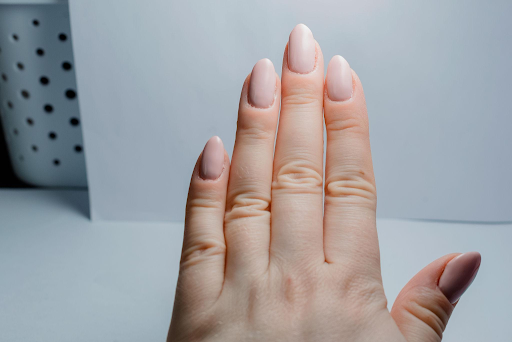
Environmental stress and surface degradation
External conditions can amplify imperfections caused by improper application. In environments with frequent exposure to water, temperature fluctuations, or mechanical stress, uneven areas tend to degrade faster. Thinner sections may wear down, while thicker or poorly cured areas may lift or crack.
A balanced, well-applied structure distributes stress more evenly, allowing the manicure to maintain its finish under varying conditions.
Where precision defines finish quality
In professional nail care, finish quality is not achieved through product selection alone, but through controlled application and curing processes. Each layer must be applied with consistency, allowing the material to behave as intended. When technique aligns with product formulation, the result is a surface that is both visually refined and structurally stable.
Precision transforms the manicure from a simple cosmetic layer into a controlled, durable system. Improper application affects both the appearance and internal structure of a manicure. A smooth, long-lasting finish depends on even layering, controlled product flow, and complete curing at every stage.
Why do my gel nails look uneven or bumpy?
Uneven texture is typically caused by inconsistent product distribution, poor brush control, or thick layers that prevent proper leveling.:
Why does my gel polish lose its shine quickly?
Loss of shine often results from incomplete curing or surface irregularities that disrupt light reflection.:
Can application technique affect durability?
Yes. Improper layering and uneven curing weaken the structure, leading to early wear, lifting, and reduced longevity.: