
Product Quality vs Application Technique: Why Both Matter — Understanding The Balance Behind Long-Lasting Nails
Proper nail products are engineered to deliver adhesion, flexibility, and durability. However, these properties only perform as intended when supported by precise application technique. When either factor is compromised, the structure of the manicure becomes unstable, affecting both its appearance and longevity.
A long-lasting manicure is not defined by product alone, nor by technique in isolation—it is the result of how both elements work together within a controlled process.
Beyond the surface: Why this balance matters
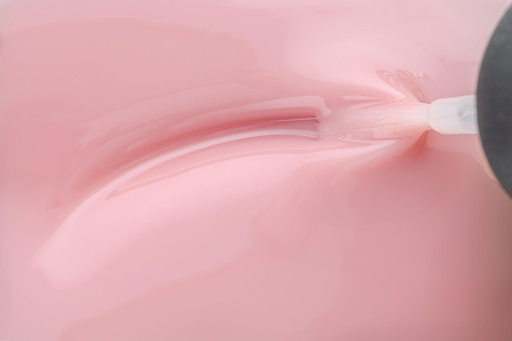
In nail care, product quality and application technique are often viewed as separate considerations. In practice, they function as a single system.
Product formulation determines how a material behaves—its viscosity, pigment density, and curing response. Technique determines how that behavior is controlled on the nail. Without alignment between the two, even well-executed steps can lead to inconsistent results.
This balance becomes most visible over time, as the manicure responds to daily wear, environmental exposure, and structural stress.
What defines high-quality nail products
High-quality nail products are formulated with controlled viscosity, stable pigments, and consistent chemical composition. These properties influence how the product spreads, bonds, and cures.
Viscosity governs flow behavior—how evenly the product distributes across the nail plate. Pigment concentration affects light penetration during curing, particularly in darker shades. The chemical structure determines how effectively the product polymerizes into a stable, flexible network.
These characteristics define the product’s potential, but they require precise handling to be fully realized.
Technique as the mechanism that activates performance
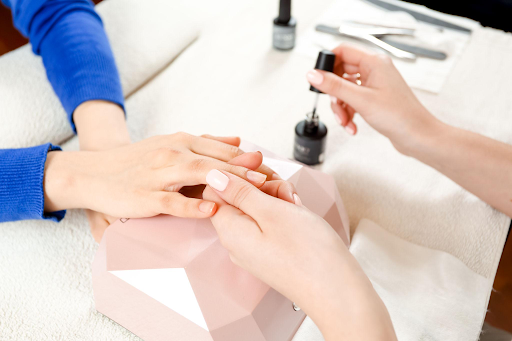
Application technique translates formulation into performance. It controls how the product is placed, how thick each layer is, and how it interacts with the nail surface. Proper technique allows the gel to self-level, ensures even curing, and maintains structural balance across layers.
When technique lacks precision, the product cannot behave as intended. Irregular thickness, inconsistent distribution, or improper preparation disrupt adhesion and compromise the integrity of the entire system.
When product quality cannot compensate for poor technique
Even the most advanced formulations depend on correct application to function properly.
If layers are applied too thickly, light penetration during curing is reduced, leading to incomplete polymerization beneath the surface. If the nail plate is not properly prepared, adhesion becomes inconsistent.
In these cases, product quality cannot prevent structural instability. The manicure may initially appear intact, but over time, lifting, dullness, or premature wear will emerge as underlying weaknesses become visible.
When technique is limited by product quality
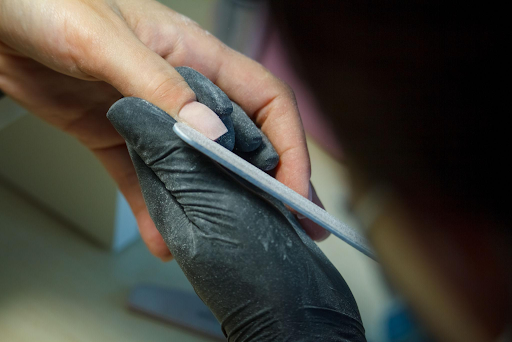
Technique alone cannot overcome limitations in formulation. Products with inconsistent viscosity may resist self-leveling, resulting in streaks or uneven surfaces. Unstable pigments can interfere with curing, while weaker chemical structures may reduce flexibility and durability.
Even when applied with precision, these materials may fail to maintain structural integrity over time. This highlights the importance of using products designed for predictable, stable performance.
How product and technique work as a unified system
A manicure functions as a layered composite structure. Each layer depends on both the material properties of the product and the way it is applied. Proper alignment between these factors ensures that the layers bond effectively, cure evenly, and distribute stress across the surface.
When this system is balanced, the result is a cohesive structure with consistent adhesion, flexibility, and finish. When misaligned, even small inconsistencies can propagate through the layers, affecting overall performance.
Impact on texture, finish, and durability
The interaction between product and technique directly shapes both visible and structural outcomes.
A well-balanced system produces a smooth surface with high optical clarity, allowing light to reflect evenly. It also maintains flexibility and resistance to mechanical stress.
When imbalance occurs, surface irregularities, dullness, or reduced wear time often follow. These visible effects are indicators of deeper structural inconsistencies within the manicure.
Performance under real-world conditions
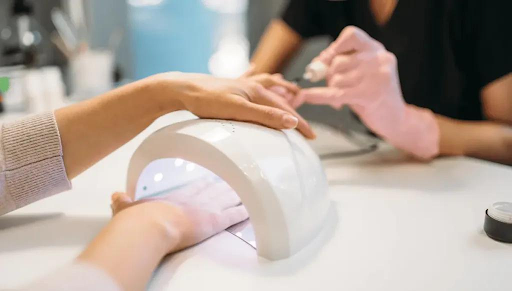
Environmental exposure and daily activity place continuous stress on the nail structure.
Water, temperature variation, and mechanical contact can amplify any weakness within the system. A properly balanced combination of product and technique allows the manicure to absorb and distribute these stresses evenly.
In contrast, inconsistencies in either factor can create localized stress points, increasing the likelihood of lifting, cracking, or surface degradation.
Where balance defines quality
In advanced nail care, quality is not defined by individual elements, but by how effectively they work together. A high-performing manicure reflects both well-formulated products and precise, controlled technique. Each supports the other, creating a system that is both visually refined and structurally reliable. When this balance is achieved, durability, finish quality, and nail health are maintained simultaneously.
Product quality defines what is possible. Application technique determines what is achieved. Long-lasting, high-quality nails depend on the balance between both.
Is product quality or technique more important?
Both are essential. Product quality defines performance potential, while technique determines how that potential is realized.:
Can expensive products guarantee better results?
No. Without proper application, even high-end products may fail prematurely.:
Can good technique fix poor-quality products?
Only to a limited extent. Technique can improve application, but cannot fully compensate for unstable formulations.: