
Skin Contact and Nail Products: Why Technique Matters — Understanding the Importance of Controlled Application
The way nail products interact with the skin can directly affect both comfort and long-term nail health. Proper application technique helps minimize unnecessary skin exposure, supports cleaner curing results, and reduces the likelihood of irritation or product instability over time.
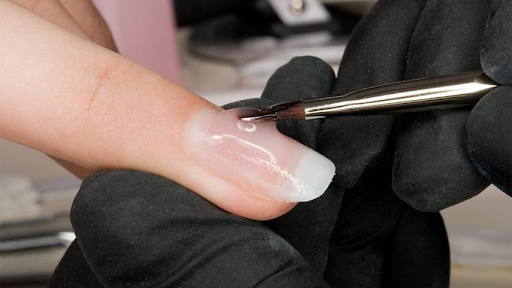
In professional nail care, technique is not only about creating a polished appearance—it is also about controlling where and how products are applied.
Why skin contact matters in nail services
Nail products are formulated to adhere to the nail plate—not the surrounding skin.
When gel, acrylic, or other coating systems come into repeated contact with the skin, several issues may occur. Products may cure unevenly, lift more easily, or create additional friction around the cuticle area.
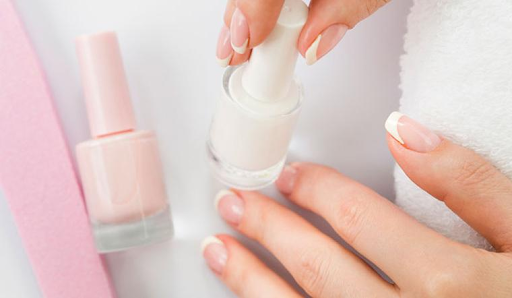
The skin surrounding the nail is thinner and more sensitive than the nail plate itself. Because of this, precise product placement becomes an important part of maintaining both comfort and structural stability.
How improper skin contact affects product performance
When a product touches the skin, it often disrupts the seal between the coating and the nail surface.
As the skin naturally moves and sheds microscopic cells, the attached product may begin separating from the edges. This weakens adhesion and increases the likelihood of lifting around the cuticle line.
Once lifting begins, moisture and debris can enter beneath the product layer, further reducing stability and affecting long-term wear.
The relationship between technique and controlled application
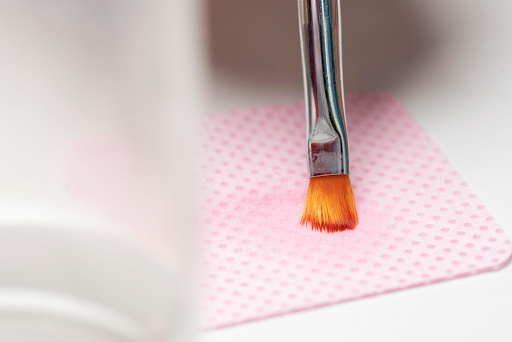
Controlled application depends heavily on technical precision.
Professional technique focuses on maintaining clean margins around the cuticle and sidewalls while distributing the product evenly across the nail plate. This requires careful brush control, balanced product load, and awareness of how the material flows before curing begins.
Even small excess amounts can spread toward the skin if the product is not guided correctly. Skilled technique minimizes this movement and maintains structural clarity along the edges.
Why product flow and viscosity matter
Different nail products behave differently depending on viscosity and formulation.
Lower-viscosity products spread more easily and may flow toward the cuticle area if not controlled quickly. Thicker products may appear easier to contain but can create uneven buildup when over-applied.
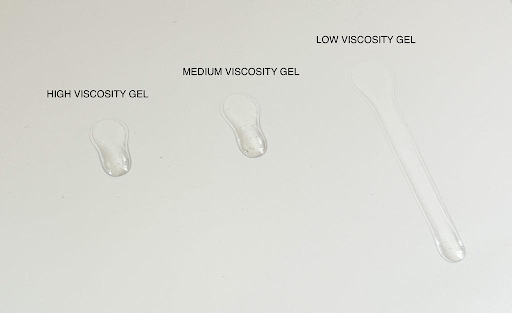
Understanding product behavior allows technicians to adapt their technique, timing, and brush movement to maintain cleaner application boundaries.
Skin contact and curing stability
Products placed on the skin do not cure in the same way it cures on the nail plate.
Because the skin surface is flexible and continuously regenerating, cured product attached to the skin become unstable more quickly. This instability often appears as premature lifting or separation around the edges.
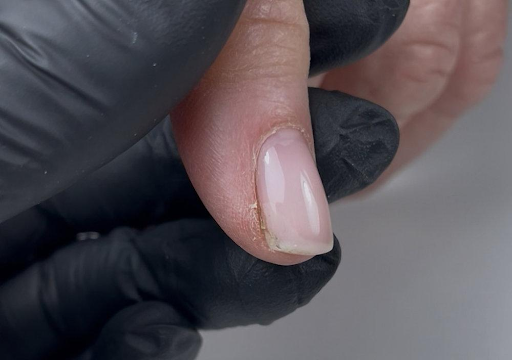
A properly sealed cuticle line allows the cured structure to remain more balanced and durable over time.
How repeated exposure can affect skin comfort
Repeated product exposure around the skin may contribute to discomfort or sensitivity in some individuals.
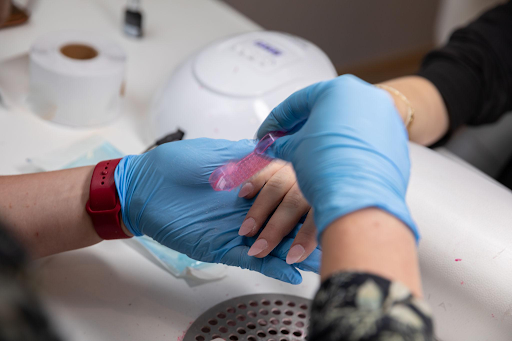
While reactions vary depending on skin condition and product formulation, unnecessary contact increases the likelihood of irritation over time. This is particularly relevant when products repeatedly cure against the same skin areas.
Controlled technique helps minimize unnecessary exposure and supports a cleaner, more stable service process.
The importance of clean cuticle work
Clean cuticle application is not only aesthetic—it also reflects structural precision.
Well-defined margins help maintain adhesion integrity while reducing opportunities for lifting and contamination. A smooth transition between the product and the natural nail supports both appearance and durability.
This level of detail often distinguishes controlled professional work from inconsistent application.
Why technique defines long-term results
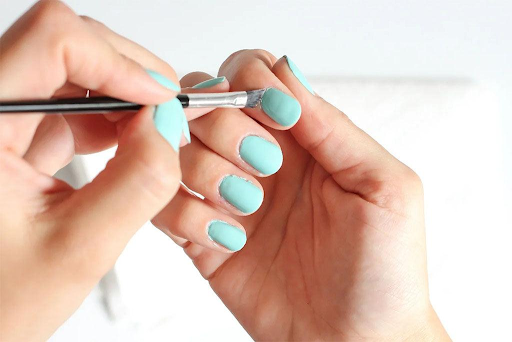
The quality of a manicure depends not only on the product itself, but on how precisely it is controlled throughout the service.
Proper technique ensures that products remain where they are intended to function, reducing instability and preserving structural balance. Over time, this improves durability, finish quality, and overall nail condition.
Small technical details at the application stage often determine how the manicure performs weeks later.
Where precision supports nail health
In advanced nail care, precision is closely connected to both aesthetics and safety.
Controlled application minimizes unnecessary skin exposure, maintains cleaner structure, and supports healthier long-term wear. This balance between visual refinement and technical control defines the standard of professional nail services.
Skin contact with nail products can affect adhesion, curing stability, and overall comfort. Skilled technique minimizes unnecessary exposure, supports cleaner application, and helps maintain healthier, longer-lasting results.
Why should gel polish avoid touching the skin?
Products on the skin can lead to lifting, uneven curing, and reduced durability over time.:
Can skin contact affect nail health?
Repeated exposure may increase irritation or sensitivity in some individuals, particularly around the cuticle area.:
How do professionals prevent product flooding around the cuticle?
Through controlled brush technique, balanced product application, and careful management of product flow before curing.: