
Why Even High-Quality Nail Products Can Peel
Peeling is one of the most common frustrations in nail care, and surprisingly, it often has very little to do with product quality. Even the most reputable gel formulas can lift when the surrounding conditions are not aligned. Nail products are engineered to perform with precision, but their success depends on something broader than the formula itself. It depends on the balance between the nail’s condition, the preparation behind the service, the technique used, and the way the product cures.
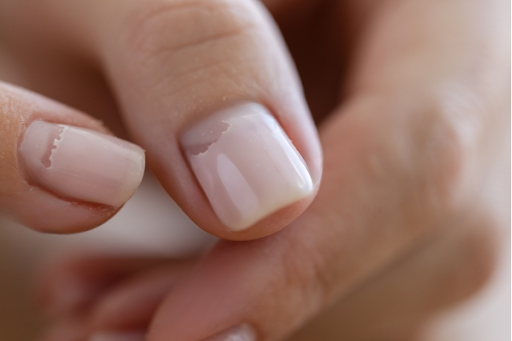
This is why peeling should not be viewed as a failure of the product. More often, it is a reflection of the system around it. In nail care, it’s never just the product — it’s the entire process supporting it.
Natural nail oils can interrupt even the best formulas
The nail plate produces natural oils that continuously migrate toward the surface. They are invisible, yet powerful enough to disrupt adhesion. Even the tiniest patch of lingering oil becomes a weak spot where lifting begins. When peeling starts from the sidewalls or at the very tip of the free edge, oil contamination is often the hidden cause.
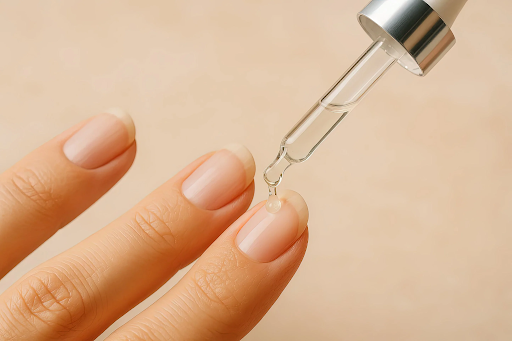
Professional preparation neutralizes these oils through careful cleansing and dehydrating. Without that foundation, even the highest-quality formulas cannot achieve full adhesion.
Prep is the quiet architect of longevity
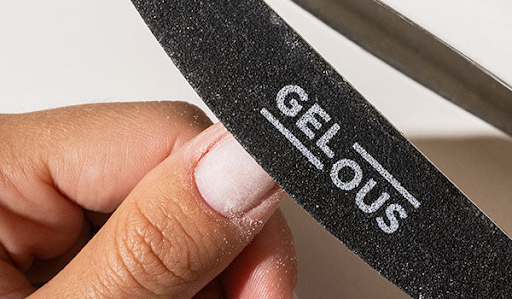
Prep determines more of a manicure’s longevity than any product ever could. When cuticle tissue remains on the nail — even a thin, invisible layer — it acts like a barrier between the product and the plate. If the surface remains too shiny, adhesion weakens. If it is over-buffed, the nail plate flexes more than the product can tolerate. Peeling that begins close to the cuticle line, especially within the first forty-eight hours, almost always points back to prep inconsistency.
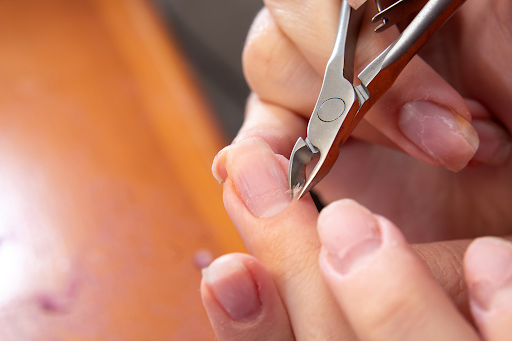
There is a simple truth in professional nail care: if prep is weak, the product never stands a chance.
Thick or uneven application disrupts curing chemistry
Premium gels are formulated to cure in thin, even layers. When the application becomes too thick, the surface may harden while the bottom remains soft. This creates internal instability that causes the product to peel from a single corner or form tiny wrinkles that slowly separate from the nail.
Uneven application near the cuticle also creates raised edges that catch easily. Even the best gel cannot compensate for an application that doesn’t match its curing requirements. Technique is what activates a high-quality formula; the product alone cannot make up for thickness or imbalance.
Curing issues can cause peeling even when everything else is correct
Curing is often underestimated, yet it plays a decisive role in wear. When a lamp’s wavelength or wattage doesn’t match the gel formula, curing becomes incomplete or excessive. Under-curing leaves the product soft and flexible; over-curing makes it brittle. Both conditions create stress points that eventually lift.
Peeling caused by curing inconsistencies often starts at the sidewalls or the thumbs, where shadows or poor hand placement prevent light from reaching the product evenly. Even with perfect prep and application, curing issues alone can lead to early peeling.
Nail health strongly influences product performance
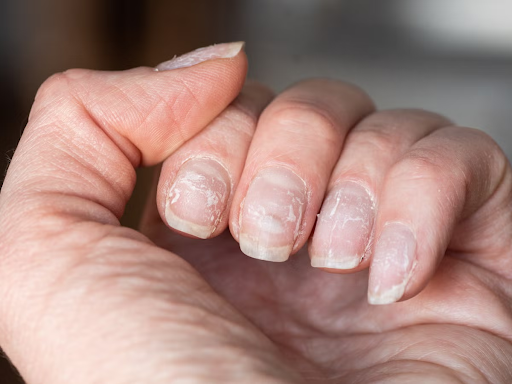
The natural nail needs stability for any product to adhere well. Nails that are thin, dry, peeling, or damaged from previous over-filing cannot hold product the same way healthy nails do. When the nail plate is compromised, it expands and contracts unpredictably, disrupting the bond underneath.
Peeling that begins at the free edge often indicates that the nail itself is peeling or delaminating. Peeling that appears from the center of the nail suggests structural weakness or excessive flex. When several nails peel at once, overall dryness or dehydration is typically involved.
High-quality products enhance what they are applied to — but they cannot stabilize a nail plate that is already unstable.
Everyday habits can undermine even perfect technique
Manicure longevity depends not only on what happens in the salon, but also on what happens afterward. Water exposure, daily cleaning products, and temperature shifts all influence the nail’s natural behavior. Nails swell when exposed to moisture and contract in colder conditions. Repeated movements — like typing aggressively or using nails to open containers — create micro-separations that eventually become visible peeling.
These everyday patterns may seem harmless, but over time, they become as influential as the service itself.
Aftercare is part of the manicure, not an optional step
The first twenty-four to forty-eight hours after application are the most critical. Neglecting hydration, exposing nails to prolonged hot water, skipping cuticle oil, or using nails as tools can easily disrupt adhesion. Peeling often begins because the bond is stressed before it fully stabilizes.
A manicure may be applied in the salon, but it matures at home. Aftercare is not a bonus — it is part of the service.
Why peeling rarely tells the full story
Peeling almost never occurs because of a single issue. It is the outcome of interactions: how the nail was prepared, how the product was applied, how it was cured, what condition the nail was in, and how it was treated afterward. High-quality products are capable of exceptional longevity, but only when every part of the process supports them.
Peeling is best understood not as a failure, but as a clue — a signal that one part of the system needs adjustment.
Even the finest nail products rely on the environment they are placed in. Prep, technique, nail health, curing accuracy, and daily habits all shape whether a manicure lasts beautifully or begins to peel. When these elements are aligned, product performance becomes predictable and strong. When they fall out of balance, peeling becomes a natural response. Understanding the many layers behind adhesion allows both clients and technicians to create results that are not only beautiful, but inherently stable and long-lasting.