
Why Proper Curing Time Matters in Gel Nails
Proper curing time in gel nails ensures that each layer fully polymerizes and bonds securely to the nail plate. When curing is insufficient or inconsistent, the gel structure remains unstable, leading to lifting, chipping, reduced durability, and potential nail sensitivity.
A gel manicure is often associated with durability and a long-lasting glossy finish. However, the performance of gel nails is not defined by the product alone, but by how effectively it is cured.
Curing is a controlled chemical process that determines whether the gel coating forms a stable, resilient structure. When performed correctly, it supports adhesion, flexibility, and long-term wear. When rushed or improperly executed, it can compromise the integrity of the entire system—often in ways that are not immediately visible.
Understanding curing is essential to recognizing why some gel manicures last for weeks, while others fail within days.
What is gel nail curing?
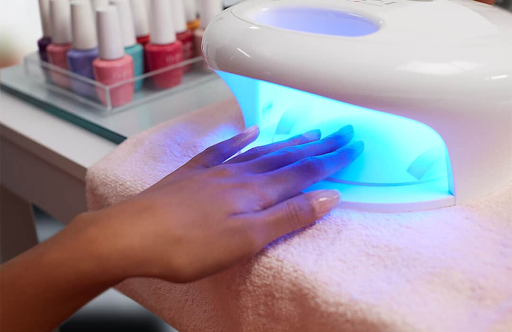
Gel curing is a photochemical reaction in which UV or LED light activates photoinitiators within the gel formula. This reaction triggers polymerization, transforming the gel from a liquid into a solid, cross-linked structure.
Unlike traditional nail polish, which dries through solvent evaporation, gel products require controlled light exposure to achieve full stabilization. Each layer—base, color, and top coat—must be cured individually to ensure structural continuity.
Curing is therefore not a passive step. It is the mechanism that defines whether the manicure will perform as a cohesive, durable system.
Why proper curing time is critical
Each gel formulation is engineered to polymerize within a specific time window under a defined light intensity. This balance between exposure time and energy output determines how completely the gel structure forms.
If curing time is reduced—even slightly—the polymer network may remain partially developed. This creates internal weaknesses that are not immediately visible but manifest over time as lifting, micro-cracking, or loss of adhesion.
Conversely, consistent curing within the correct parameters allows each layer to achieve optimal cross-linking. This results in a stable, flexible coating that resists mechanical stress and environmental exposure.
The hidden impact of under-curing
Under-curing is one of the most significant causes of premature gel failure.
Incompletely cured gel may appear hardened on the surface, while deeper layers remain soft or partially polymerized. This mismatch creates internal instability, weakening the bond between the gel and the nail plate.
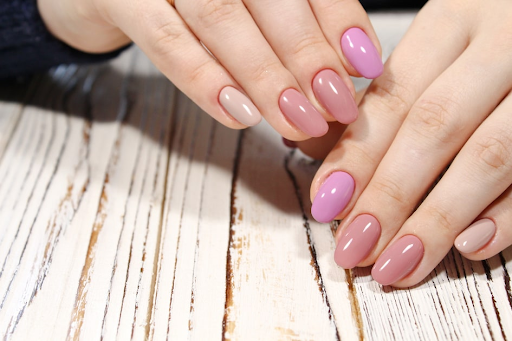
Over time, this can lead to edge lifting, peeling, or a noticeable decline in surface clarity. In some cases, residual uncured components may also contribute to discomfort or increased sensitivity. Because these effects develop gradually, under-curing is often underestimated despite its critical role in long-term performance.
Over-curing and loss of flexibility
While under-curing is more common, excessive curing can also alter the material properties of gel. Extended exposure to light can increase rigidity by over-tightening the polymer network. This reduces flexibility, making the coating more prone to cracking under stress.
Optimal curing is therefore not about duration alone, but about achieving the correct balance between hardness and flexibility—allowing the gel to move naturally with the nail.
How application thickness influences curing
The effectiveness of curing is directly influenced by how the gel is applied.
Thicker layers limit light penetration, preventing full polymerization throughout the structure. Even when the outer surface appears fully cured, inner layers may remain under-processed.
Applying thin, even layers ensures that light can penetrate uniformly, allowing the entire structure to cure consistently. This principle is fundamental to achieving both durability and structural integrity.
The role of equipment and light calibration
Curing performance depends not only on time, but also on the quality and calibration of the light source.
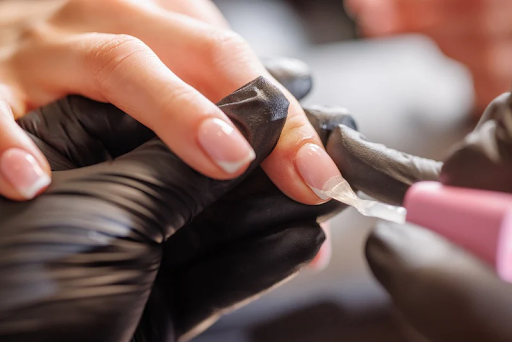
Professional-grade lamps are designed to deliver consistent wavelength and intensity, ensuring predictable polymerization. In contrast, low-output or aging lamps may fail to activate the gel fully, even when curing time appears sufficient. Regular maintenance and proper equipment selection are therefore essential components of a controlled curing process.
How environment and daily conditions affect results
External conditions can amplify the effects of improper curing. For individuals in environments with fluctuating humidity or frequent exposure to water and cleaning agents—such as in many urban settings—any weakness in the gel structure becomes more apparent. Poorly cured layers are more susceptible to expansion, contraction, and mechanical stress. When curing is performed correctly, the gel structure becomes more resilient, maintaining both adhesion and surface integrity under daily conditions.
Curing as a defining standard in nail care
In professional nail application, curing is not treated as a routine step, but as a defining technical standard. A well-executed manicure reflects control over the entire process—from preparation and application to curing. Each layer must be stabilized before the next is introduced, ensuring that the final structure performs as a unified system. When this level of precision is maintained, the result is not only visually refined, but consistently durable.
Proper curing time is essential because it determines how completely the gel structure forms. Fully cured gel provides adhesion, flexibility, and durability, while improper curing leads to instability, lifting, and reduced performance.
Why do gel nails lift after a few days?
Lifting is often caused by under-curing, improper nail preparation, or thick product layers that prevent complete polymerization.:
How long should gel polish be cured?
Most gel layers require 30–60 seconds under a professional LED lamp, depending on the product and lamp specifications.:
Can improper curing affect nail health?
Yes. Incomplete curing can leave residual product instability, which may contribute to sensitivity or weakened adhesion over time.: